

Carbon Fiber CL
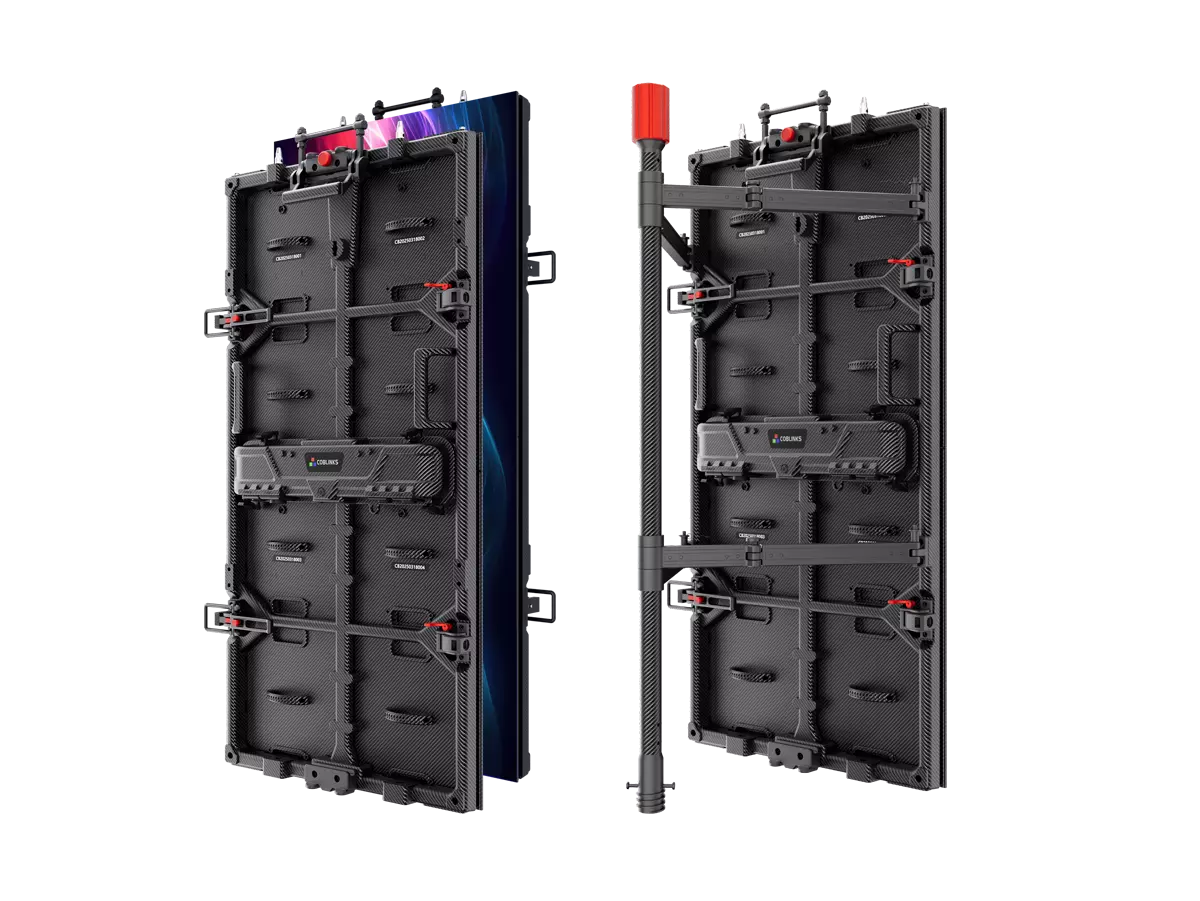
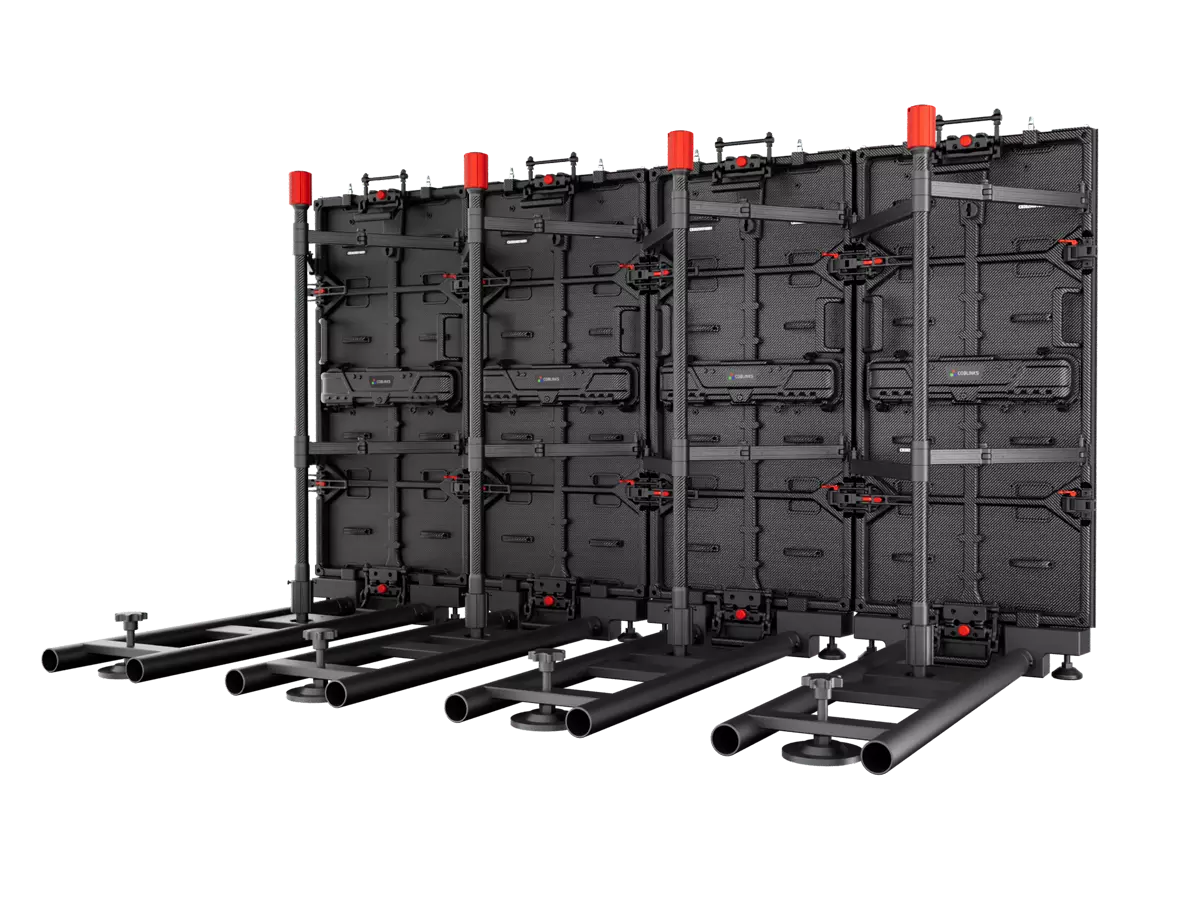
| Model No. | CL1.9 | CL2.6 | CL3.91 |
| Pixel Pitch(mm) | 1.95mm | 2.6mm | 3.91mm |
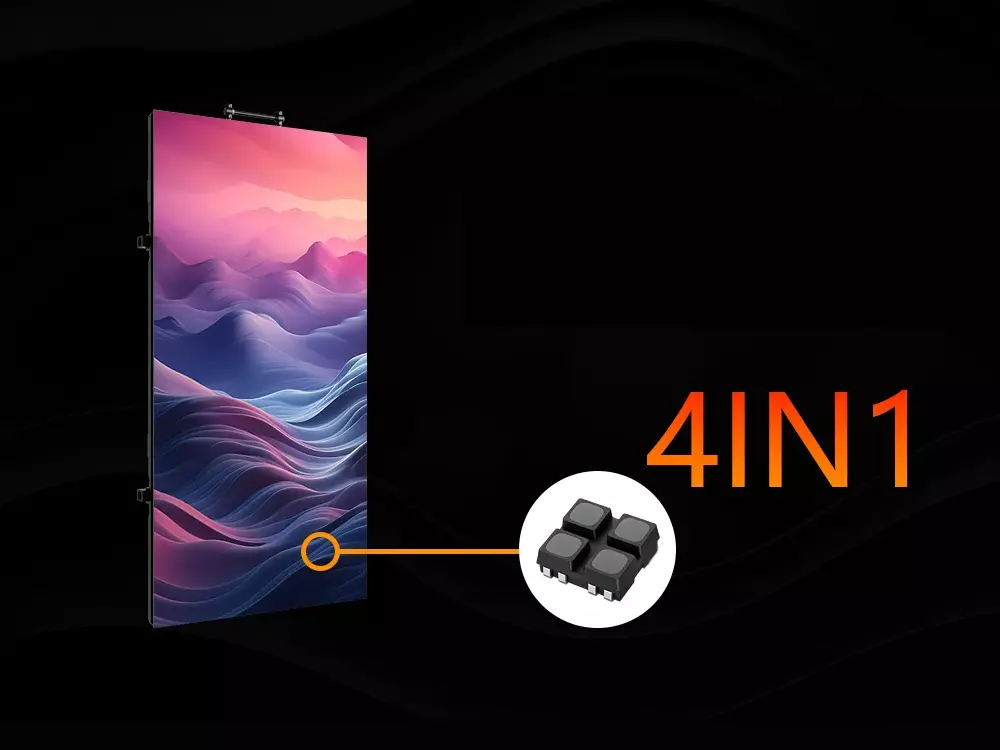
| LED Configuration | 4 IN 1 | 2 IN 1 | SMD2020 |
| Pixel density(dots/m²) | 262,144 | 147,456 | 65,536 |
| Module size(mm) | 250x500 | 250x500 | 250x500 |
| Module resolution(pixels) | 128x256 | 96x192 | 64x128 |
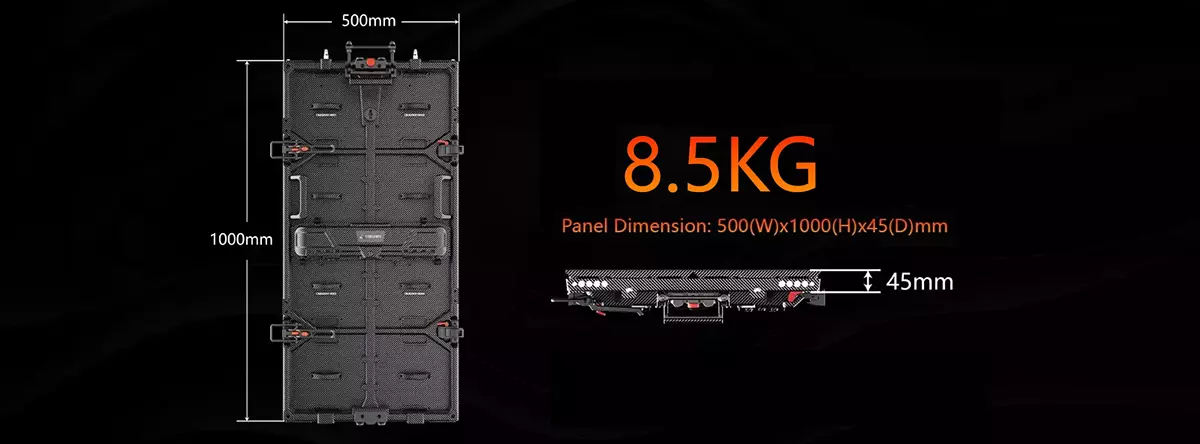
| Cabinet size(mm) | 500x1000x45 |
||
| Scanning mode | 1/16 |
||
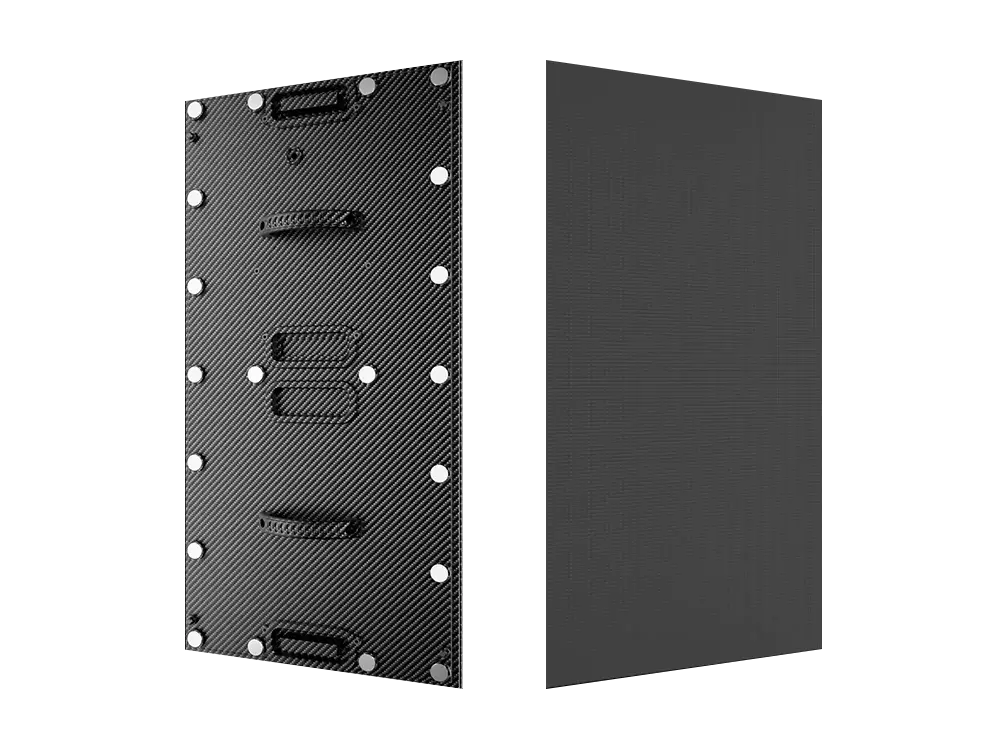
| Cabinet Material | Carbon Fiber |
||
| Weight | 8.5 KG/PCS |
||
| Brightness (cd/m²) | 1000 |
||
| Refresh Rate (Hz) | ≥7680 |
||
| Avg. Power Consumption (W/m²) | 206 |
||
| Max. Power Consumption (W/m²) | 620 |
||
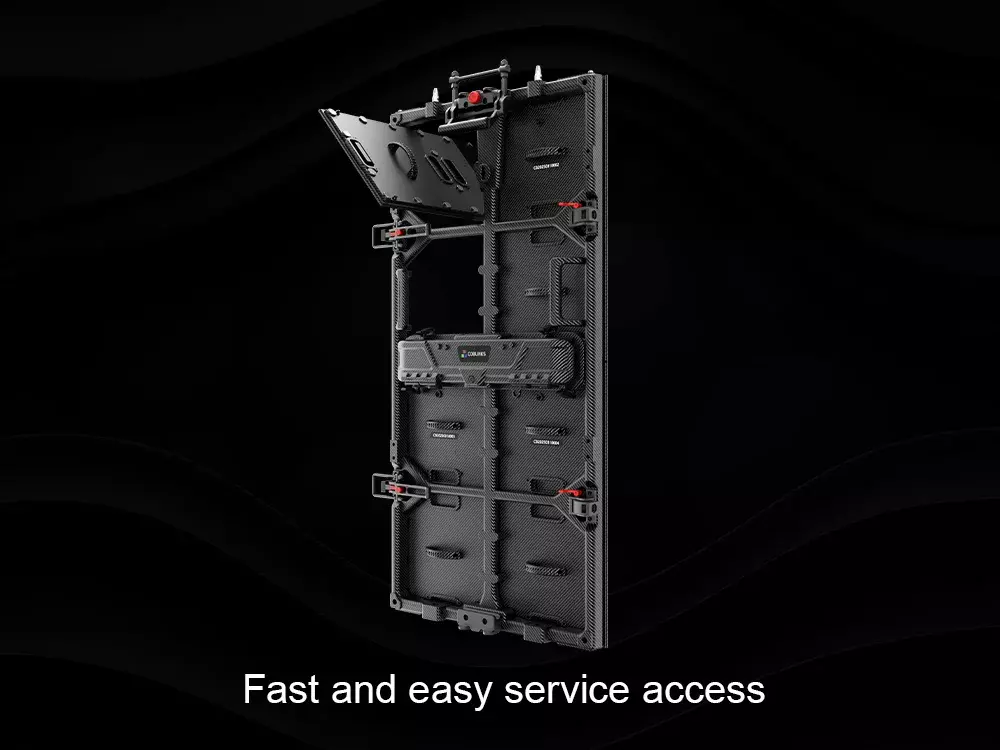
| Maintenance Mode | Front&Rear |
||
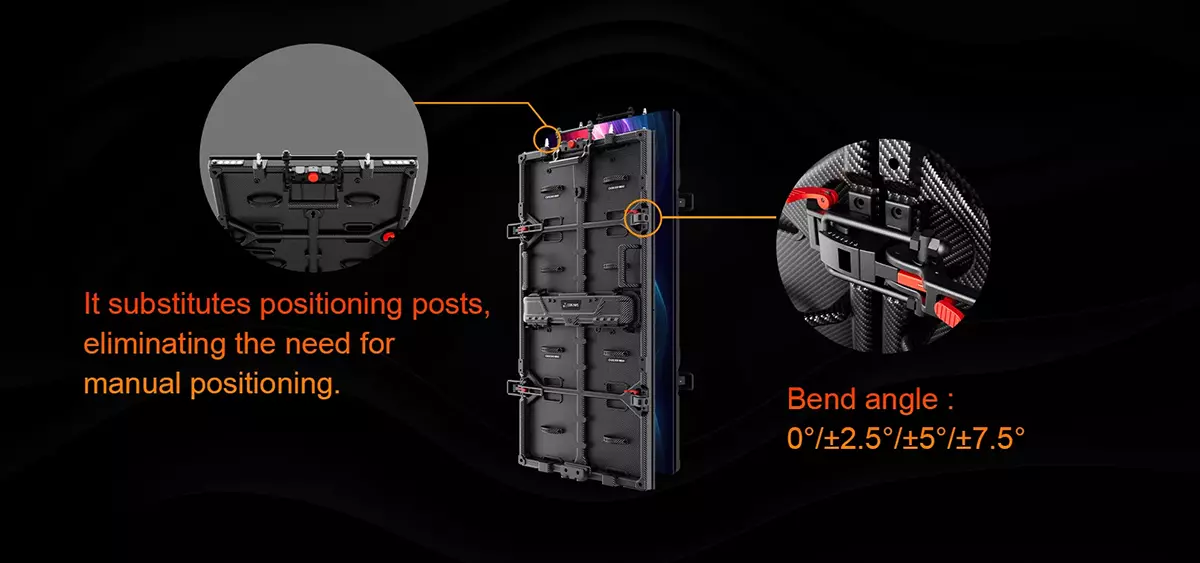
| Rotation Angle | 0°/±2.5°/±5°/±7.5° |
||
| Protection level | IP40 |
||
| Life Span (H) | ≥100,000 |
||
| Model No. | CL2.9 | CL3.91 | CL4.81 |
| Pixel Pitch(mm) | 2.9 | 3.91 | 4.81mm |
| LED Configuration | SMD1415 | SMD1921 | SMD1921 |
| Pixel density(dots/m²) | 112,896 | 65,536 | 43,264 |
| Module size(mm) | 250x500 | 250x500 | 250x500 |
| Module resolution(pixels) | 84x168 | 64x128 | 52x104 |
| Cabinet size(mm) | 500x1000x45 |
||
| Scanning mode | 1/14 |
||
| Cabinet Material | Carbon Fiber |
||
| Weight | 9 KG/PCS |
||
| Brightness (cd/m²) | 5000 |
||
| Refresh Rate (Hz) | ≥7680 |
||
| Avg. Power Consumption (W/m²) | 220 |
||
| Max. Power Consumption (W/m²) | 664 |
||
| Maintenance Mode | Front&Rear |
||
| Rotation Angle | 0°/±2.5°/±5°/±7.5° |
||
| Protection level | IP65 |
||
| Life Span (H) | ≥100,000 |
||
LED screens work by regulating RGB LED pixels. The control system receives video signals, distributes data to each cabinet, and adjusts the brightness of red, green and blue lights to blend full colors. Fast continuous refresh creates clear, smooth images.
Carbon fiber LED cabinets outperform conventional die-cast aluminum frames across weight, precision, durability and operational efficiency, bringing tangible advantages for rental, touring and high-end fixed installations.
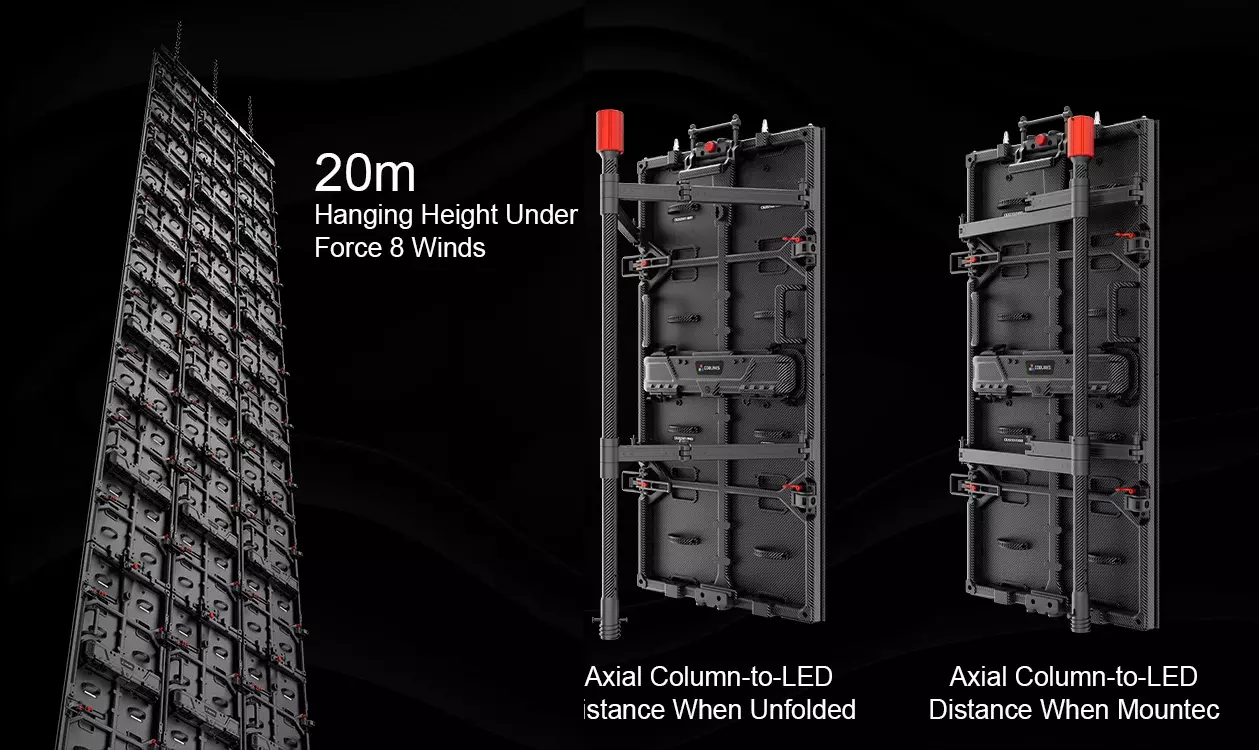
- 30% Ultra-light Weight: Carbon fiber delivers far lighter panels while retaining high rigidity. It eases truss load limits, supports larger suspended screens, cuts labor for rigging, and slashes global shipping & airfreight expenses dramatically. Single-person installation becomes feasible, unlike heavy aluminum cabinets requiring multiple workers.
- Near-zero thermal expansion for flawless flatness: Aluminum expands and warps under stage lighting or temperature swings, causing uneven seams. Carbon fiber barely deforms with heat, maintaining gap-free seamless splicing and consistent flatness for long-term perfect visuals.
- Higher strength-to-weight ratio & anti-impact performance: Aerospace-grade carbon fiber boasts superior tensile strength versus aluminum. It withstands frequent loading/unloading collisions without bending, lowering module damage rates for touring rental businesses.
- Strong corrosion & UV resistance: Unlike aluminum prone to oxidation and salt-spray erosion at coastal venues, carbon fiber resists rust, UV degradation and harsh outdoor climates, extending cabinet service life without extra anti-rust treatment.
- Greater design flexibility: Light rigid frames enable deeper concave/convex curved configurations, wave and cylindrical creative displays without heavy auxiliary support structures required by bulky aluminum cabinets.
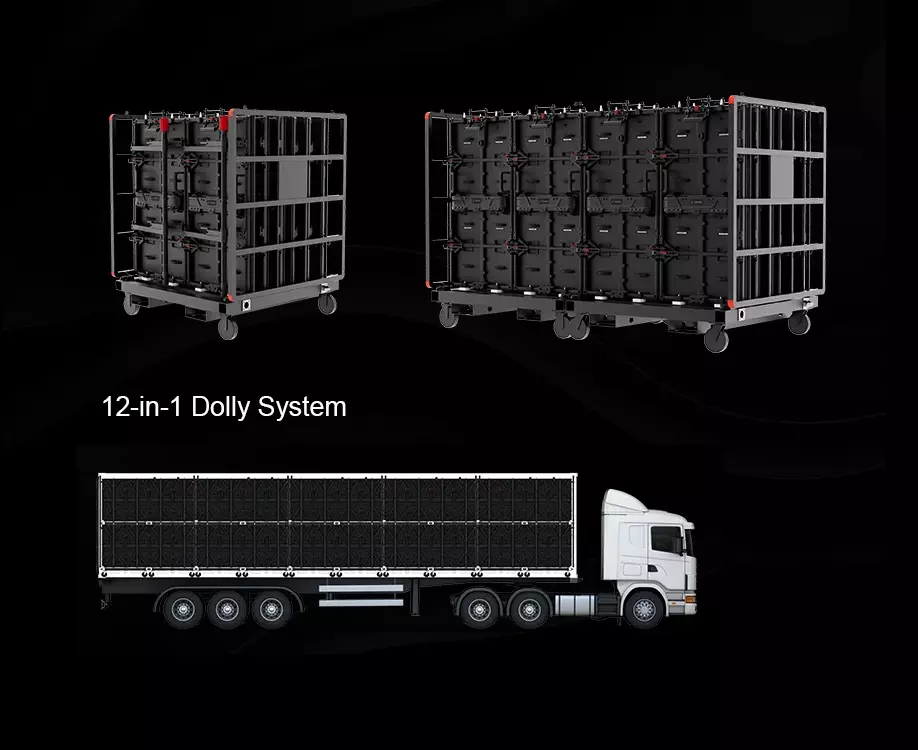
The lightweight design of CL Series panels significantly reduces installation costs in several key ways. Reduced weight minimizes transportation requirements, allowing more panels per truckload and lowering logistics costs. Lighter panels also reduce the need for cranes and heavy lifting equipment on site.
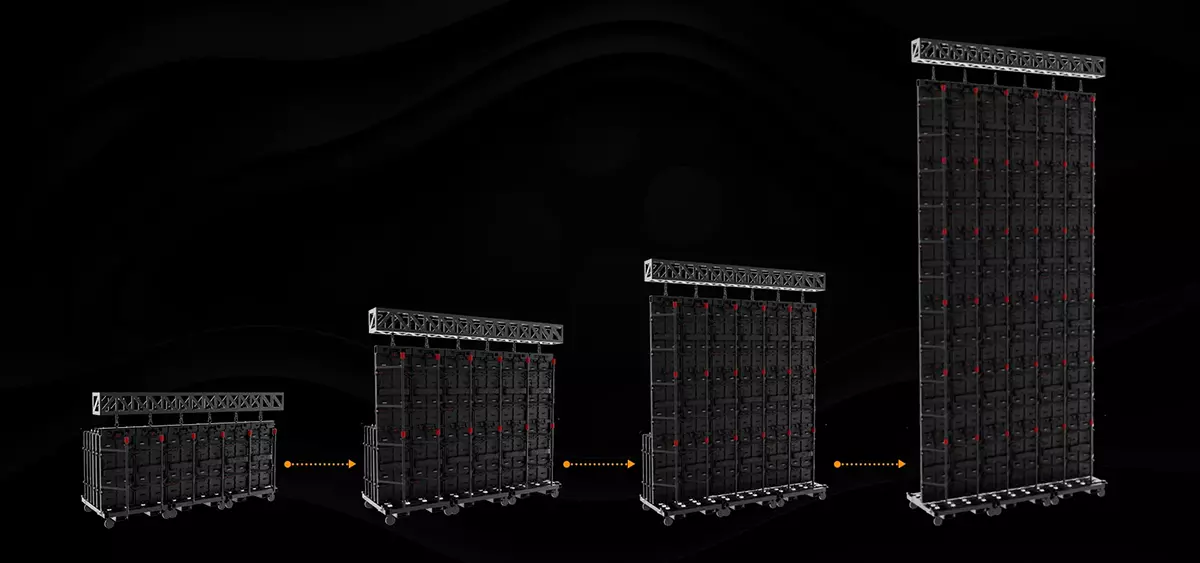
Furthermore, smaller crews can install panels faster, reducing labor hours and accelerating project timelines. Ease of handling also simplifies repair and replacement, lowering maintenance costs over the panel's lifecycle.
Yes. Carbon fiber LED panels are exceptionally durable and well-suited for frequent transportation, as demonstrated by their widespread use in touring stage productions.
- Superior strength & impact resistance — Carbon fiber's tensile strength-to-weight ratio exceeds steel, enabling it to withstand repeated setup and teardown while protecting internal electronics from impacts and vibrations.
- Lightweight construction — Approximately 30% lighter than aluminum, reducing handling fatigue and transportation costs.
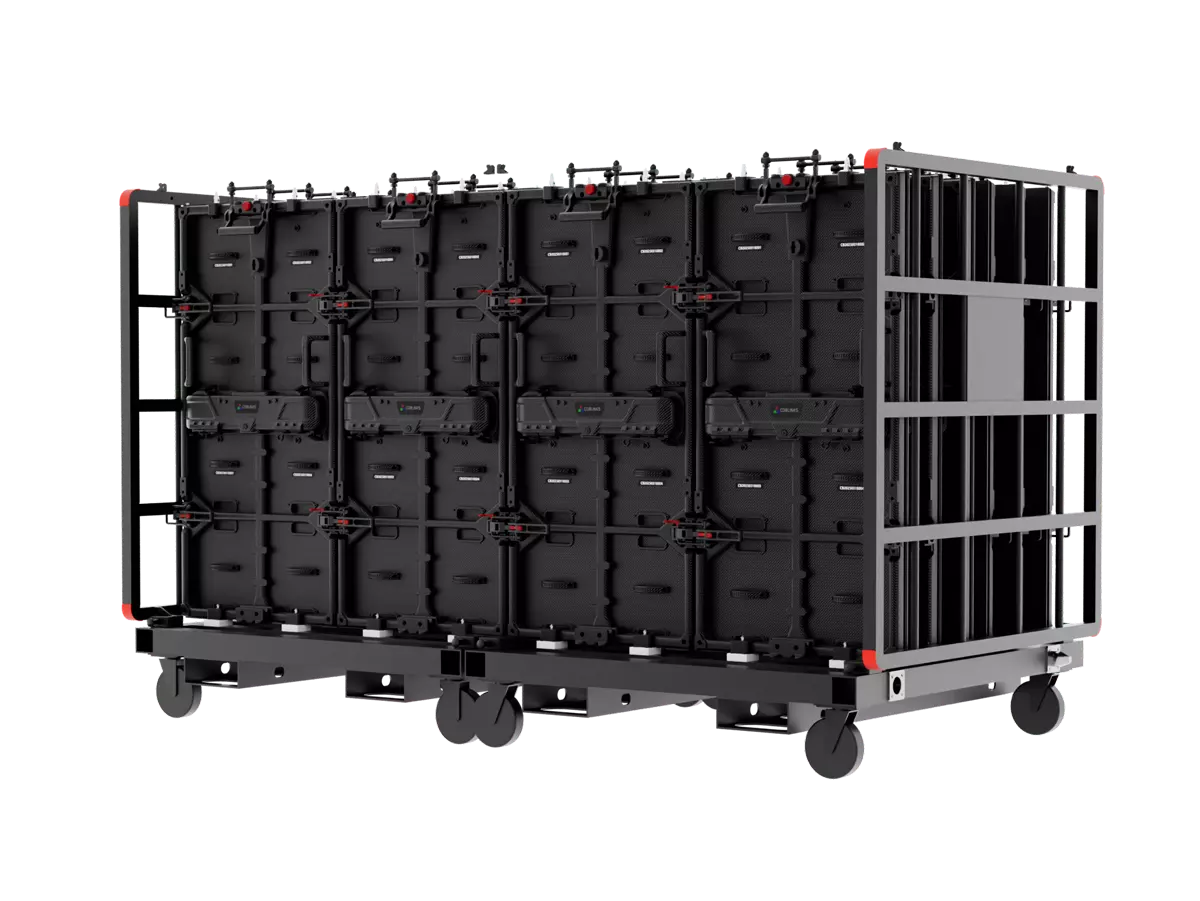
- Rugged transport cases — Professionally designed flight cases protect panels during transit.